Staying Motivated in 2022
6 Tips for Staying Motivated in 2022
Make a choice to choose life EVERY SINGLE DAY (Each day we need new doses of inspiration and motivation)
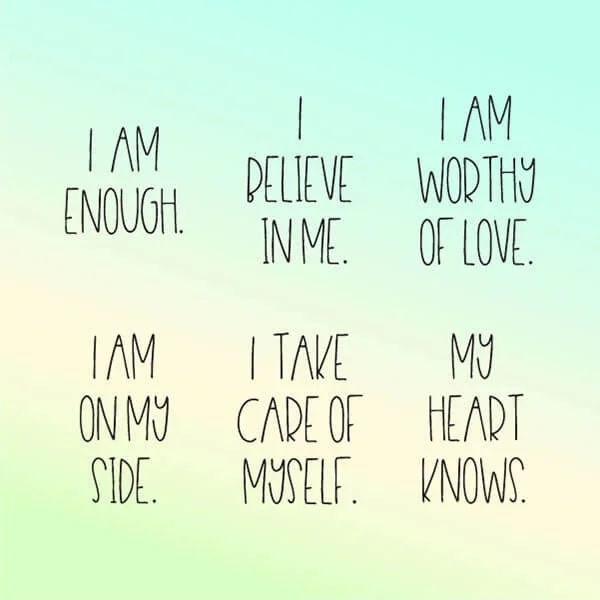
Write out your affirmations and put them in a place where you can see them daily (e.g. mirror, next to your bed, cellphone, etc.)
Give yourself space to write or share your thoughts…sometimes just to have a blank piece of paper or a journal for free writing can be very therapeutic
Set small goals that over time help you reach a big goal
Identify accountability partners who can journey with you and hold you accountable
Don’t be afraid to reach out for help (e.g. pastor, mentor, coach, psychologist, trusted friend)
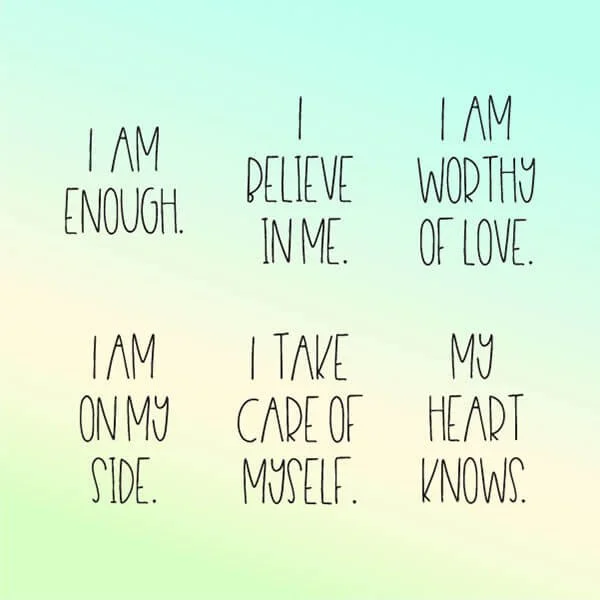
Here are some sample affirmations. Create your own and say it a couple times each day!
You are a solution
I was invited today to speak on “Creating a Solution to the Economy” by Judah Experiences.
Everyone on this earth is here to solve a problem. The Late Dr. Myles Munroe once said, “You came to earth to answer a question God knew you would be asked.” Have you taken the time to explore the answers to the problems around you?
Below are five (5) tips I shared with the participants:
Seek clarity (Take time to sit, meditate and connect with God for direction)
Be real (Is your solution relevant now and into the future? Do you have the capability and expertise?)
Find your passion (When you are excited about something, you will see it through to the end)
Have a plan (Use SMART goals as a planning resource or you can book a “Plan to Win” coaching session with myself)
Identify your people (We all need people to help us build and to buy into our vision)
If all of us tap into our call and purpose we will impact through creating solutions our economy needs.
Dreams deferred are not dreams denied
I started my Project Management journey in Fall 2018 by registering for an Intro course. The profession peaked my interest and I wanted to dive further so Spring 2019 I enrolled in a certification training for my Certified Associate in Project Management (CAPM) designation. Following the course, I didn't feel confident to sit the exam.
Life happened and over a year passed without me following up on the goal. Fast forward to Summer 2020, I had 3 weeks vacation from work and being limited with options to travel due to the pandemic I was looking for avenues to maximize my time. I began looking at different courses I could enroll in, after a few searches...guess what showed up??? A CAPM exam prep course!!! I knew in that moment it was now or never. I took up the challenge and engaged in learning and studying EVERY SINGLE DAY. It was TOUGH. When I took practice tests I had more "fail" than "pass". Trust me that can mess you up mentally but it challenged me to keep pushing.
I am sooo grateful to my mom who advised me to set the date for the exam and pay for it. Once I did that, I JUST INTENSIFIED my studies.

Ladies and gentlemen, I am overjoyed to officially add the Certified Associate in Project Management (CAPM) designation to my name by the globally recognized Project Management Institute. IT'S ALL GOD!!!!!!!!!
It would be unfair for me to just blog about this great news without sharing my process.
I would like to leave you with 6 key takeaways:
1. Present your goals and dreams to God and allow Him to lead and direct your paths.
2. Consistently speak life (beware of self limiting beliefs which can often creep up on you)
3. Set the goal (be as specific as possible and stick with it)
4. Put in the work (what are you willing to sacrifice to achieve your goals?)
5. Have a great support system (From my big bro Delric Beneby giving me certification exam tips, useful resources from Adrianna Knowles and Sasha Miller to my immediate family having prayer sessions with me)
6. Be ok with failing (I knew there was a chance I could fail. I'm sure I would have been devastated but life moves on. Don't allow the fear of failing to cripple you.)
Tips to Maximize Your Time
We are experiencing the impact and effects of COVID-19 worldwide. All is not lost, there is STILL hope! Here are some tips below to maximize your time:
1. Determine what you need from this time
All of us are in different places. Some may be working from home while others may have free range to do as you want. Whichever position you are in, take time to explore what key goal you want to achieve during this period (e.g. rest, lose weight, completing a course, starting a business plan etc.)
*My heart goes out to essential workers who will be required to work during this time. I pray for your continued health and safety.
2. Create a plan
Planning is key! Once you've identified a key goal, use SMART goals as a framework. In order for goals to be clear and reachable they should be:
Specific (simple, sensible, significant).
Measurable (meaningful, motivating).
Achievable (agreed, attainable).
Relevant (reasonable, realistic and resourced, results-based).
Time bound (time-based, time limited, time/cost limited, timely, time-sensitive).
3. Find an accountability partner
We all need someone to hold us accountable. Find a trusted family member or friend and let them know the goal/s you've set. Ask them to check in to ensure you are staying on course & provide any further support you may need.
4. Give yourself grace
Many of us are experiencing pandemic fatigue. If a day doesn't go as planned or you just need a lazy day, please give yourself room to just BE. Someone once wrote, "Be gentle with yourself, you're doing the best you can." I'm still learning this one! :)
If you found these tips helpful, I would love to hear from you in the comment section below. Let's stay positive and keep our hope in Jesus Christ!
Educating toward resilience
“The only way forward is to move.” These were powerful words stated by Rev. Henry Knowles, Queen’s College Principal, days after Hurricane Dorian devastated Grand Bahama and Abaco. He admonished the staff to acknowledge the current circumstances and recognize that the only way we can get to a sense of normalcy is through action. To date, many affected families have been relocated to Nassau, some Family Islands and parts of the United States.
How do we remain resilient as we experience such adversity? Resilience is the capacity to recover quickly from difficulties. The Resilience Framework, originally created by Angie Hart and Derek Blincow (with help from Helen Thomas and a group of parents and practitioners), gives further context for school administrators, teachers, business owners and anyone working with those affected by Hurricane Dorian. Although this resource was first designed for children and youth, it has expanded to include adults. It has five main compartments: Basics, Belonging, Learning, Coping and Core Self.
Basics. Look at the necessities of life (food, shelter, money etc.). Basics are important because we can’t break through to the other compartments of resilience until these fundamental needs are met. For hundreds of families the sense of security has been gravely impacted. Children and adults have been forced to create a new life. The government and various organizations have been doing their part to ensure people get the basics, however, there are still many individuals and families who require basic attention. We must not lose heart as many people still need this foundational level of help.
Belonging puts great focus on good relationships. This compartment believes healthy relationships and good influences assist people in remaining hopeful. In the interim, how can we create a sense of belonging for those who have been displaced? Although a child or adult may no longer have their physical home, how can we create a sense of belonging in their temporary spaces (e.g. shelter, school, church)? There is a quote that states, “Home is where the heart is”. Once a person can feel love they will have sense of belonging. This is a challenge to all Bahamians to stand together in building positive, encouraging, and supportive relationships with families affected by Dorian. As we stir a sense of belonging, allow people to talk and focus on good times and experiences. It is also important for children to make friends and mix with other children. For adults, changing your scenery or doing something new can truly be a boost.
Learning focuses on finding out about and discovering new things. Once a child is sorted with school or an adult has secured a job, it’s important to explore less formal ways of learning, like developing interests, talents and life skills. These can be old or new interests, but in keeping with the Resilience Framework the goal is to use these to help the child or young person organize her/himself.
Kudos to the young sailors from Abaco who recently competed in Optimist North American Championship (OPTINAM). They used their passion, interest and expertise to get their minds off Dorian, and instead focus on something they enjoy and excel at. Jasmin Amberle showed courage and tenacity amidst devastation. According to Keir Clarke, head coach of the team, “We found out that she was on a ferry from Abaco to Nassau and found some housing. That girl is the most focused, genuine and sound individual.” Amberle is an example to all of us of revisiting a passion, organizing ourselves around it, and moving forward.
Coping is all about the things children and adults do to make it through each day amidst challenges. This could mean being brave, standing up for our views and beliefs, or going after our goals and dreams etc. The effects of Dorian will be felt for a long time and we must not rush this process of grief after loss. Yes, we must be resilient and keep moving but it’s also okay to stop, share and cry if we need to. Don’t be afraid to seek or ask for help. If you are working with survivors, it is important to be open and understanding. Remember, everyone acts and responds differently to trauma so it’s vital that we are sensitive to their needs.
Core Self puts emphasis on our inner self (i.e. our thoughts and beliefs). Who we are on the inside really shows in difficult situations. As adults it’s important that we not only learn how to cope with challenges, but also equip our children to positively respond to crisis. Observe a baby when he or she falls; if the parent makes a big stir the child will more than likely cry, but if the parent remains calm and collected the child knows that she will be okay and is less likely to cry. Most children experience at least one traumatic experience in their life. Are we building our children to tap into resiliency or defeat? A key way to build resilience is through our beliefs. The Resilience Framework encourages us to know ourselves. If we believe we are strong, courageous and an overcomer, we can and will embody these characteristics when faced with a tough situation.
Visit www.boingboing.org.uk to learn more about the Resilience Framework. If ever there is a time for us to nurture resilience in children, young people, and adults it is now. May we model responsibility for ourselves, face problems, and live resiliently so our children can have a pattern to follow.
Do I clearly see my dream?
This is the second question in the Put the Dream to the Test Series, "Do I clearly see my dream?" As many of you know I was recently nominated and was a successful candidate for this year's 40 under 40 awards by Professional Services Bahamas.
I have a little secret though...this has been dream especially within the last 2 years. I always admired the concept of recognizing influential and successful leaders for the 30 under 30/40 under 40 in the US and other countries. As you all know I always put in the work never seeking recognition but in the back of my mind thought it would be cool if one day I was considered for it.
I would have never imagined the time would come so soon. I clearly saw the dream and every day I aim to let my actions line up with where I want to be. Yes, I mess up and fall off at times but I get back in the game and keep going. Look your dream/s in the eyes and say, “I'm coming for you!”
Is my dream really my dream?
I can truly say my dreams are my own. From an early age my parents empowered me amidst a family member insisting I seek a different career in the world of computers and technology. The key view was that I could make more money in that field. Despite my love for media and communications, I was considering it.
I am grateful to my parents who knocked the thought out of my head by encouraging me to do what I am passionate about. I also had to be real with myself and know I didn't have the natural skill/desire.
John C. Maxwell reminds us, “you can not achieve a dream you do not own.”
Think on your personal history. How have your plans, goals, and desires been influenced by others?
Are they a result of who your parents think you are?
Who others think you are?
Who you wish you were?
Or are they a result of…
Who you really are and are meant to be
BE SURE YOUR DREAMS ARE YOUR DREAMS!
Is lack of self worth affecting your leadership?
Published in the Nassau Guardian (June 14, 2019)
I recently taught a leadership course where we discussed the three barriers to leaders being able to empower others, which, according to John C. Maxwell, are desire for job security, resistance to change and lack of self-worth.
Job security is a barrier to empowerment as leaders may feel as if when they empower subordinates, they themselves will be dispensable. This is a great concern in work environments where there is a high probability that an individual will lose his or her job to a more skilled or younger individual.
The second barrier, resistance to change, is the fear of the unknown, which holds back the potential of an individual/organization. Growth and innovation are required for constant development. Change is the price of progress. A lot of us don’t like change as it requires new ways of thinking, adapting and functioning.
Finally, lack of self-worth is low confidence in self, how you look, the tendency to focus on what others think and being well liked.
I made the assertion to the class that from my experience self-worth is the biggest barrier to empowerment. I believe this is so because leaders will not give their power away until they have found their power (i.e. understanding of who they are and their role in an organization).
Yes, there are certain roles and functions that one can not give away, but in the instance where there are opportunities for empowerment it’s important for leaders to ask themselves, “What is required of me?” (i.e. things I must do). Once this is determined, leaders can give away lesser tasks to focus on bigger tasks. There is a rule of thumb that if someone can do something at least 70 percent as good as you, give it away.
I’ve observed “leaders” not allow others to have a voice perhaps because they never had a voice, or choose favorites when there was someone more capable and qualified to do a job because these individuals were more than likely “followers” who stroke their egos. I’ve also seen this type of person submerge themselves with work to always appear busy and needed because if they were to really slow down and self-evaluate they would have to face realities of self, relationships, work and home environments, etc. These interactions and decisions are examples of lack of self-worth.
If you desire to have self-worth in leadership with the view of empowering others, then you need the key building blocks that are competency, a life-giving inner circle and high self-esteem.
Competency
When you know how to get the job done this boosts confidence and performance. Although we have all had occasions when we weren’t the expert and had to learn from those around us, nothing is more fulfilling than knowing what needs to get done and having the capacity to make it happen. Competent people are not threatened by the abilities of others and are happy to not only show what they can do, but let others do so as well. In strengthening your self-worth, it’s important to find what you are passionate about and can do well.
Inner circle
Jim Rohn once said, “You are the average of the five people you spend the most time with.” We must foster relationships that are grounded in transparency, trust and accountability. When we are able to be vulnerable and share our hearts without judgment or being shot down it opens new dimensions in our growth and development. Feeling safe in the inner circle contributes to one’s ability to go out into the larger world with confidence. When you have persons who cheer you on and support you in the background, you will be able to do it for your own teams.
Do you have an inner circle? Who are the individuals who make up that circle? Should all the individuals be there? Be sure that these individuals are building you up and not tearing you down.
High self-esteem
In it’s most simple form, high self-esteem is being able to think the best about yourself. It is being a positive friend to yourself, but as with most friends, you have to get to know each other.
Discovering who we are takes time, introspection and facing truths. Dedicate quiet times of reflection daily to truly assess your life. Ask yourself questions like: “Why am I here?”, “Do I believe in myself?”, “Where would I like to be?” etc. These questions can provide clarity and focus, springing us into intentional action. When high self-esteem is demonstrated, a leader is not threatened by other’s ideas, releases control and permits others to shine and take the credit.
As a leader, your people are counting on you take them to a destination. This requires you believing in yourself and your mission. You should put a major investment into self-development.
A few resources I’ve found useful in building self-worth are assessments (Strengths Finder 2.0, Myers Briggs Personality Test and DISC profile) and books (”Becoming a Person of Influence” by John C. Maxwell, “Ordering Your Private World” by Gordon MacDonald and “Daring Greatly” by Brené Brown.)
Don’t let lack of self-worth be a barrier to your leadership. Lead and manage yourself well so you can positively impact and give the power away to others.